

New Products
USB Data/Power Splitter
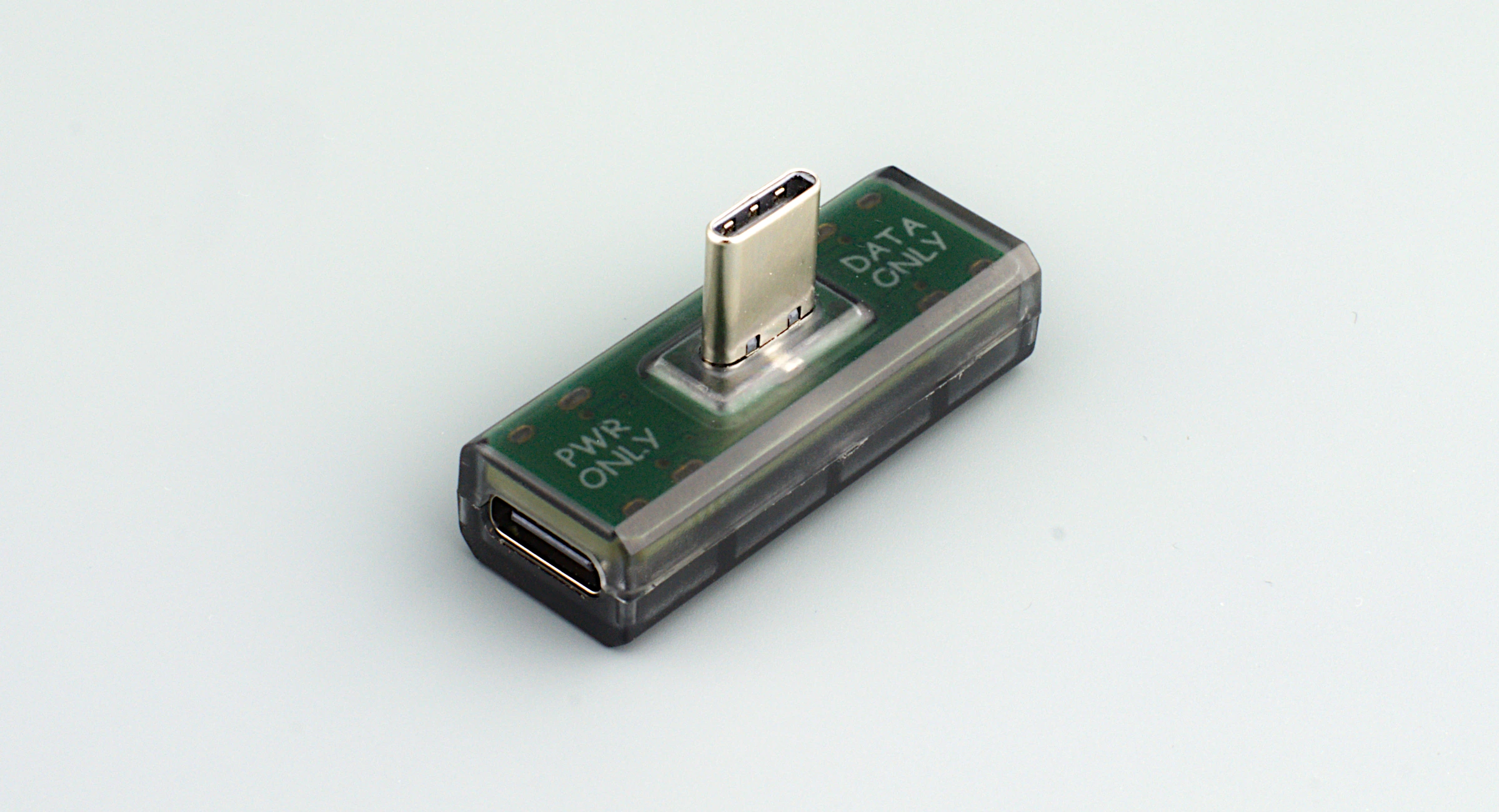
This splitter separates the 5V power and data lines in a USB cable. Power and data go to different places, while ground remains shared. This prevents power conflict and protects your devices. It is designed primarily for DIY PiKVM setups based on Raspberry Pi 4B but will be useful for many other DIY projects based on Raspberry Pi.
Why You Need the Splitter in DIY PiKVM
When building a PiKVM from scratch, you need to supply power to the Pi board and transfer USB data to a host. The USB-C port on a Raspberry Pi 4B can receive both. However, the Pi easily starts feeding power back into the computer's USB port. This can damage the port or cause instability.
The solution: This splitter isolates the 5V line while keeping data (D+/D–) and ground connected:
- Pi gets clean 5V from a dedicated supply
- No need to rig up a power supply through GPIO pins
- Data flows normally to/from the computer
- No backpowering, boot failures, or random host reboots
- No USB device detection issues
Other Use Cases
Use this splitter whenever you need USB data without shared power:
- USB gadget mode on Raspberry Pi (4B and 5)
- Embedded Linux devices with USB OTG
- Custom KVM or remote management projects
- Any DIY setup mixing USB data and external power
Bonus feature: thanks to the USB Type-C design, you can rotate the splitter to choose where you want power/data sockets to be, on the left or on the right.
How to Connect
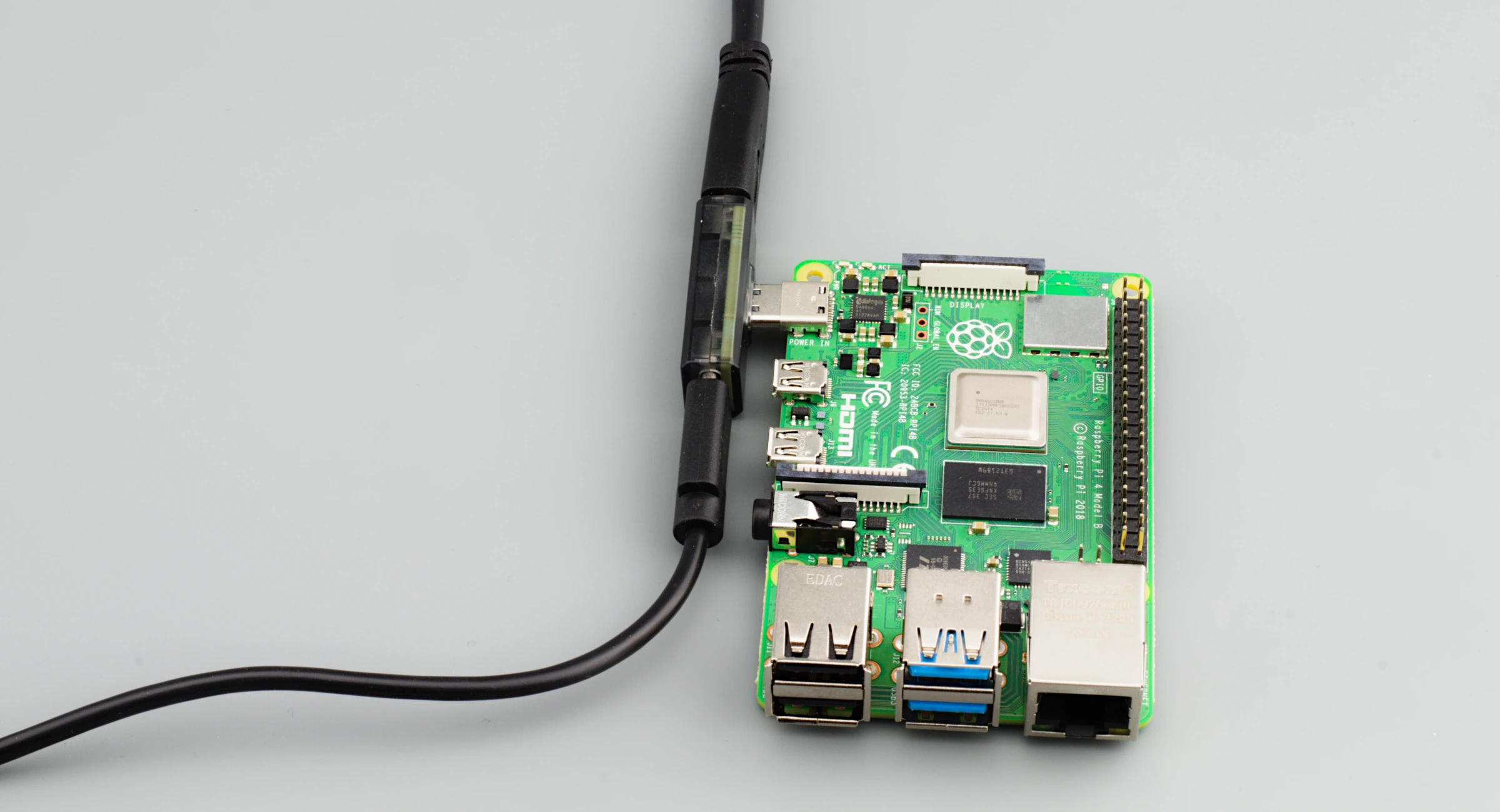
- Connect the power input to a 5V (up to 3A) power supply.
- Connect the data port to the target laptop, worsktation, or server.
- Connect the USB-C output to the Raspberry Pi.
Power and data will remain electrically separated and function as a single USB interface.
Key Advantages
- Prevents reverse power flow (backpower)
- Protects host and target USB ports
- Ensures stable Raspberry Pi power delivery
- Maintains full USB data functionality
- Simple plug-and-play installation
- No firmware or configuration required
Availability
Depletable CM4/5 Adapter
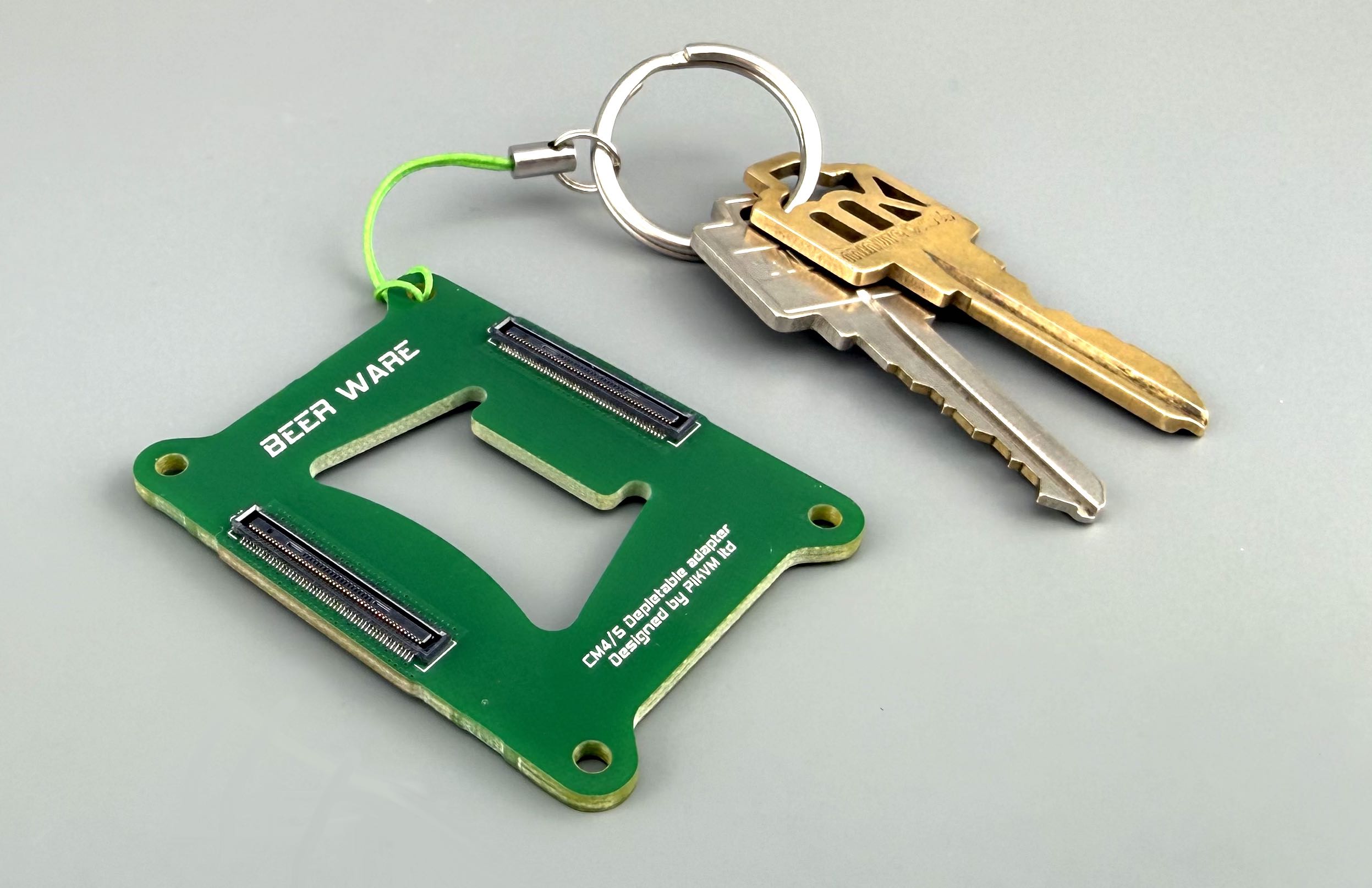
CM4/CM5 connectors fail after just ~80 insertions. At $35-150 per module, that adds up fast. That’s why we developed Beer Ware—a wear-and-replace adapter designed to take one for the team. It’s cheap, convenient to use, and can have a second life as a keychain bottle opener.
The Connector Math
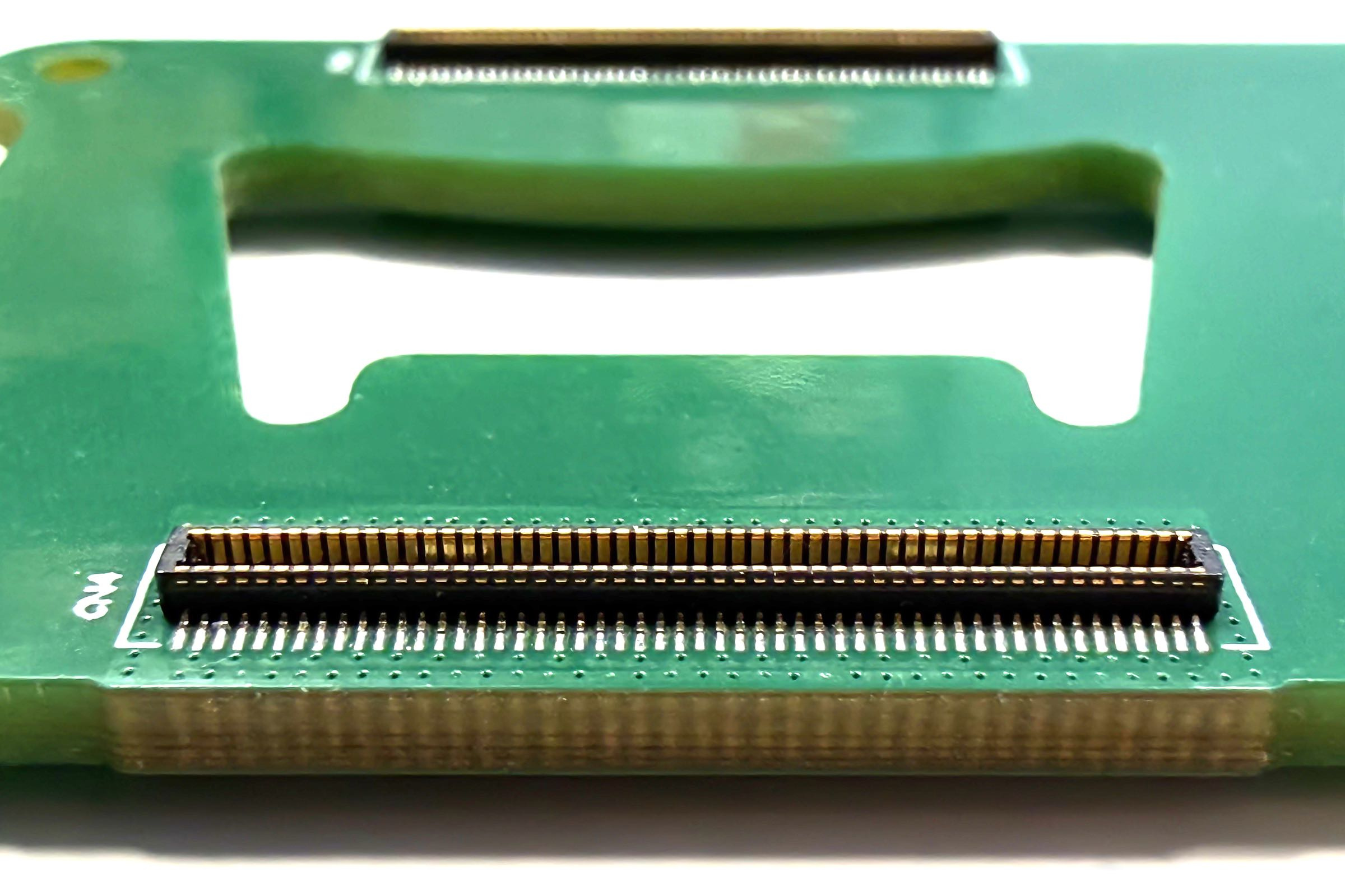
CM4/CM5 modules use a Hirose DF40C-100DS-0.4V(51) connector. In our experience, it wears out after around 80 connections. That’s better than the 30 mating/unmating cycles that the vendor promises in the datasheet, but still not nearly enough. Testing 10,000 boards would destroy 125 Compute Modules. At $35 to $150 per module, you could be wasting tens of thousands of dollars.
With Beer Ware, you get the same connectivity. But instead of wearing out the expensive CM board, you sacrifice the cheap depletable adapter.
Built for Frequent Swapping
When you are swapping CMs a hundred times a day, the small things matter. With Beer Ware, you can remove the CM alone or together with the adapter without finger pinching or an awkward grip.
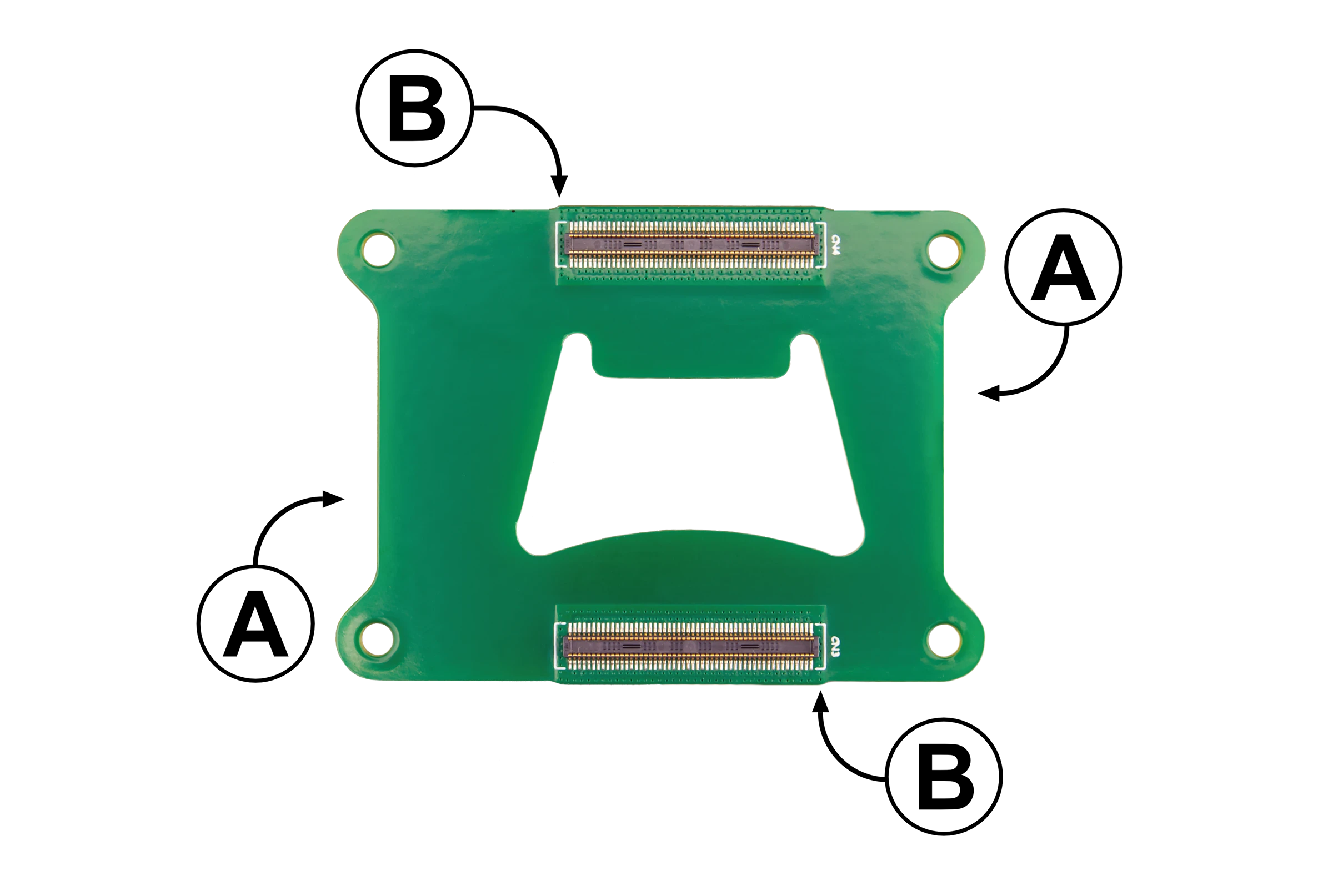
That’s because we added cutouts on the short edges (A) of the board for easy CM removal, and small tabs on the long edges (B) so you can easily pull out Beer Ware together with the module when needed.
Second Lives Aren’t Just for Cats!
After saving your Compute Modules and sacrificing its own connectors, Beer Ware can still serve you!
A perfect keychain for a true geek—compact, doesn’t tear your pocket, and always ready to open a bottle or two for you.
Beer Ware comes in retail packs and cost-efficient bulks.